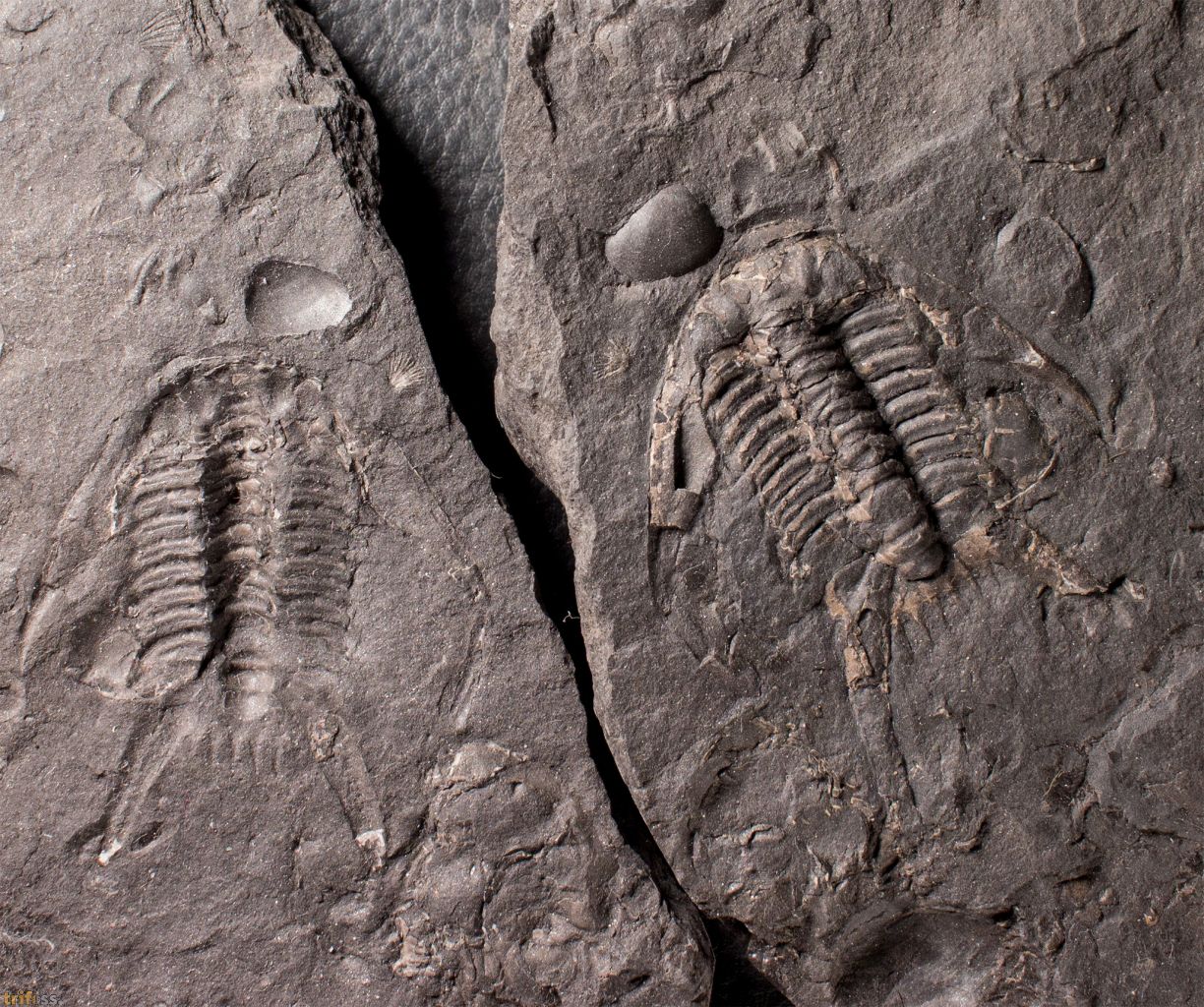
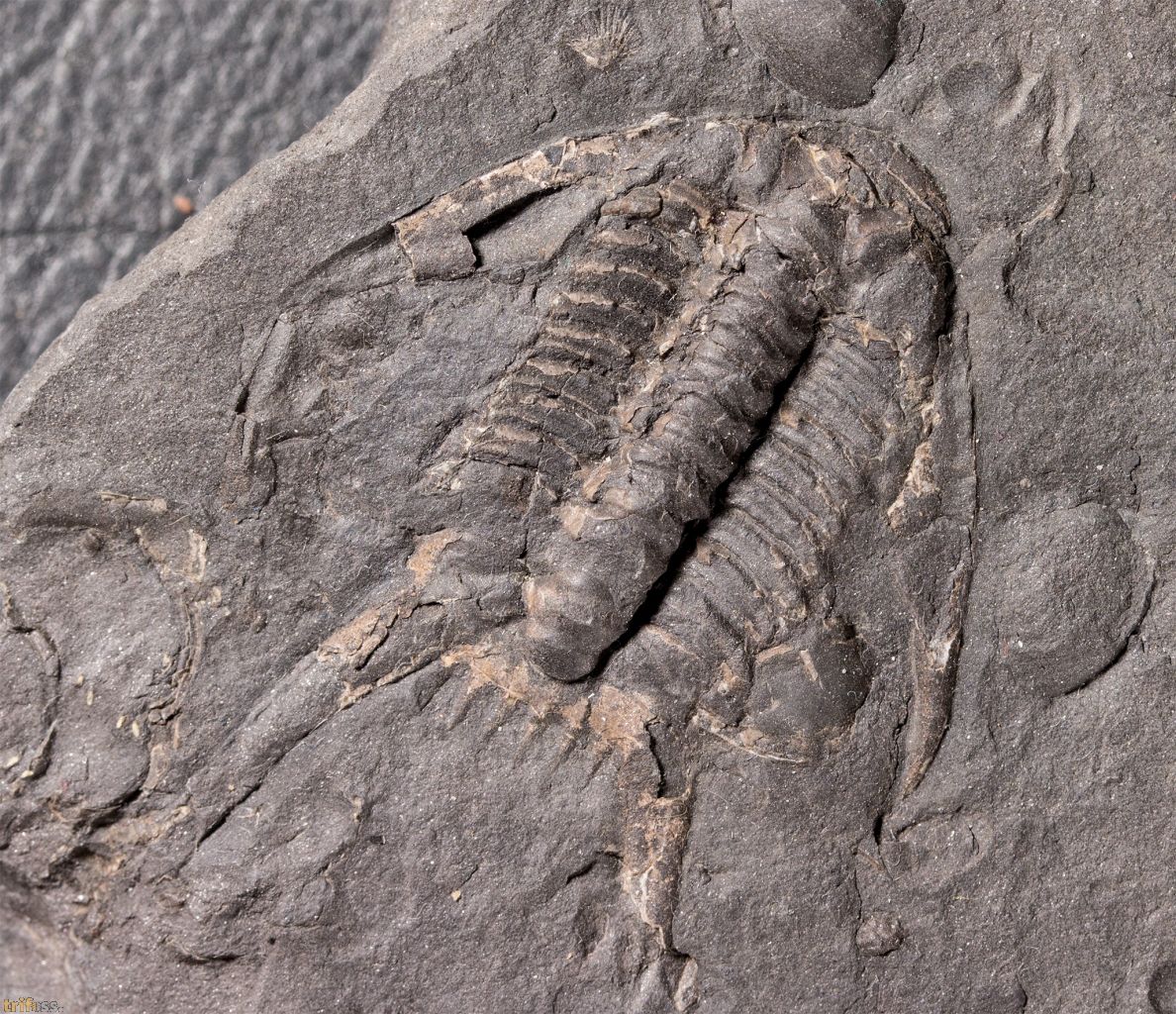
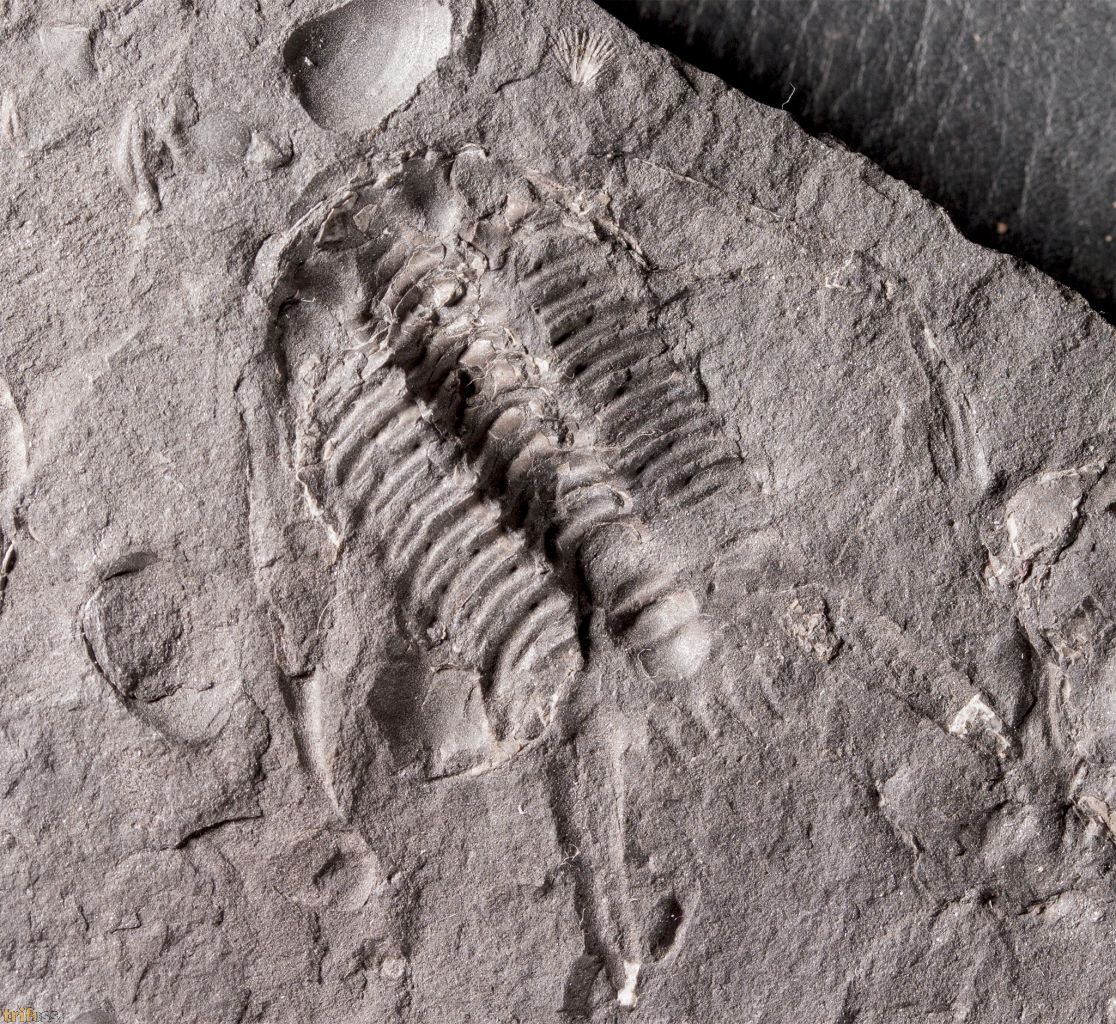
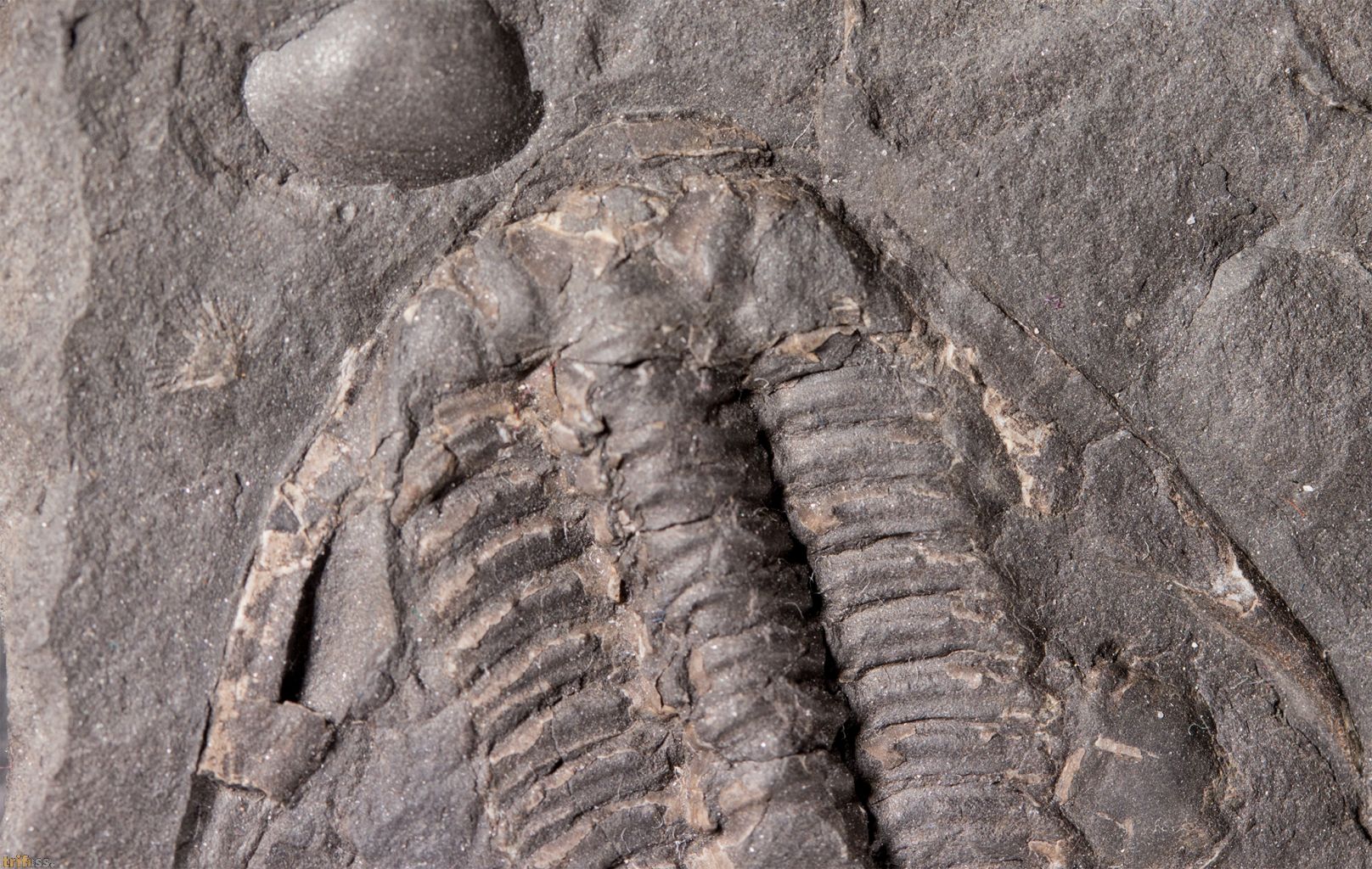
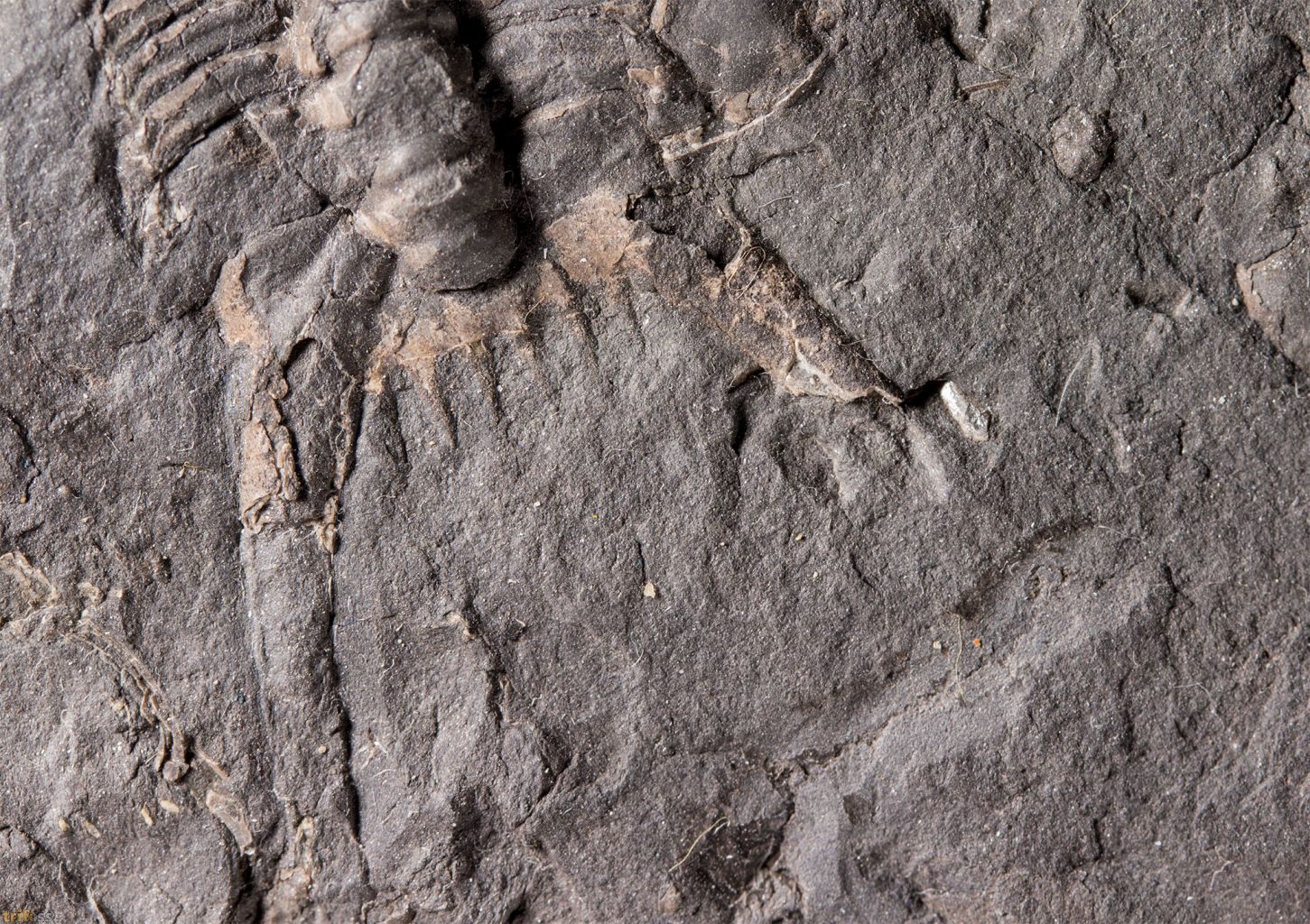
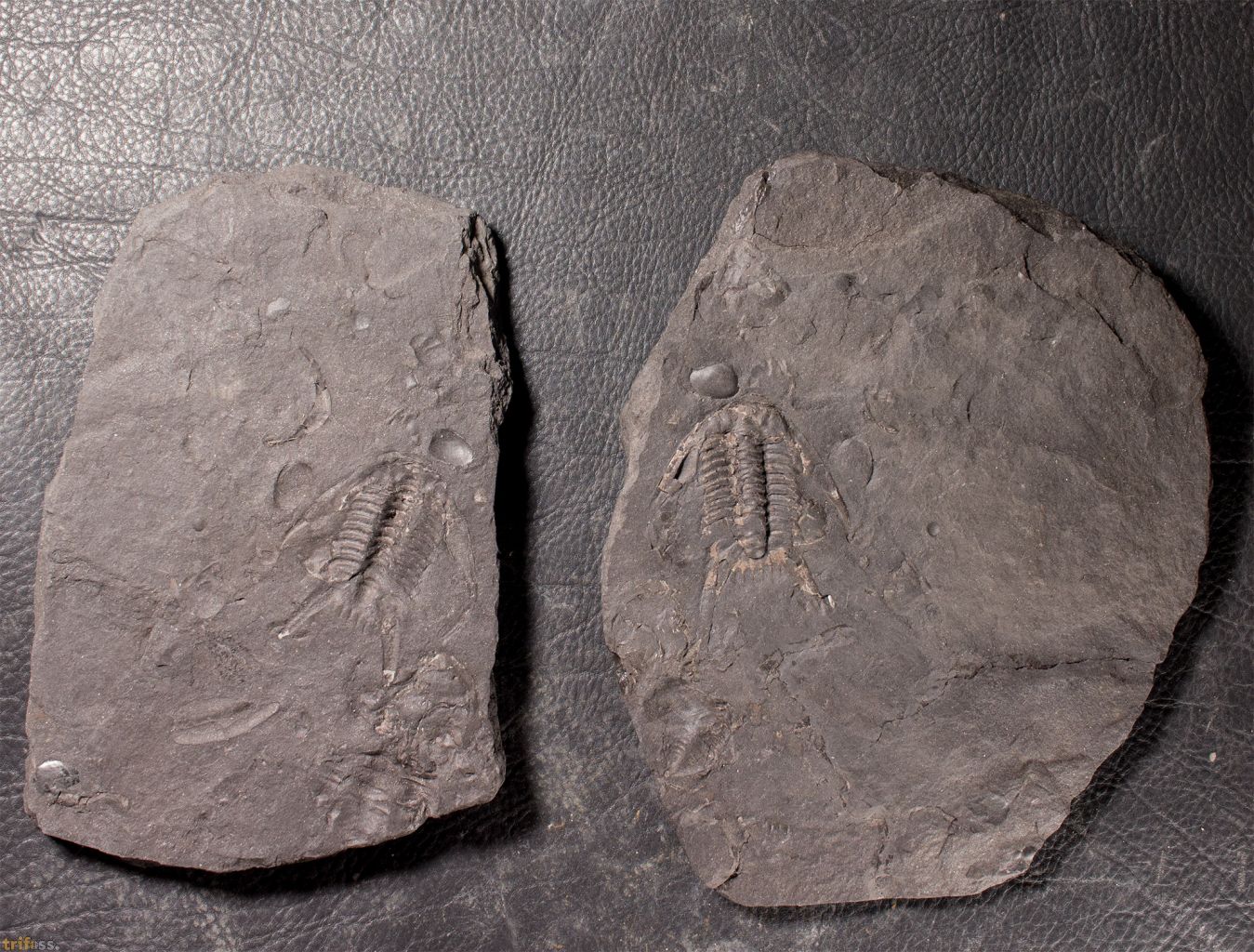
This trilobite is an exceptional rarity of the species Chlustinia keyserlingi from the Czech Republic. Measuring approximately 42 mm in length, it is by no means a small specimen. The preservation is remarkably good. There are no torn thoracic rings or no major damages. The pygidial spines are clearly visible and they could potentially be transferred from the negative side. Although doing so would inevitably damage or destroy the negative.
The species Chlustinia keyserlingi is considered an almost mythical fossil of the Czech Ordovician, especially when it comes to complete, articulated specimens.
In older literature, the species is sometimes referred to as Chlustinia detecha Šnajdr, 1984, but this taxon is now regarded as a synonym of Chlustinia keyserlingi.
The systematic history of the species is long and complex. It was originally described by Barrande in 1846 as Odontopleura keyserlingi. Due to its pronounced spinosity, it was later referred to in the fossil trade and in non scientific sources as Dicranurus keyserlingi, particularly in connection with the first Moroccan specimens that appeared on the market. This may have been an attempt to distinguish it more clearly from Odontopleura ovata. It is likely that the work of Pribyl & Vanek (1965), who correctly established the genus Chlustinia, was not widely known. Their paper was published in Czech and therefore far less accessible than the “old Barrande”, which is held as a standard reference in many libraries.
Even today, the discussion of the systematic position of the genus Chlustinia is active. It was placed in the Acidaspidinae by Ramsköld and Chatterton (1991), currently by Mergl (2014) it is again assigned to the Odontopleurinae.
Overall, this trilobite represents an extremely rare specimen in excellent preservation, complete with both positive and negative in a respectable size. |