Fossils for sale
New Fossils
Canadian Trilobites
Chinese Trilobites
Czech Trilobites
French Trilobites
German Trilobites
Moroccan Trilobites
Portuguese Trilobites
Spanish Trilobites
Trilobites Bolivia
UK Trilobites
US Trilobites
Solnhofen Fossils
Bundenbach Fossils
Libanon fossils
Chengjiang Fossils
Fossils Green River Fm.
Nattheim Fossils
Echinoderms
Ammonites
Plant Fossils
Other Fossils
Other
Welcome back!
E-mail address:
Password:
Forgot your password?
Home
Checkout
Shopping cart »
0
Article
You do not have any products in your shopping cart yet.
Main page
»
Fossils Sold
Sort by ...
A to Z
Z to A
Price in ascending order
Price in descending order
Newest products first
Oldest products first
Most selling products
Show
376
to
400
(of in total
6839
new products)
Sites:
«
...
16
17
18
19
20
...
»
Here is a rare trilobite specimen of the species Burlingia halgedahlae from the Marjum Formation in Utah.
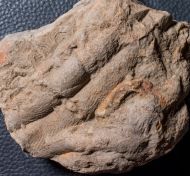
Here is a plate with a trilobite track of the species Cruziana furcifera from the Armorican Quartzite Formation of Portugal.
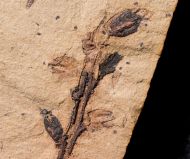
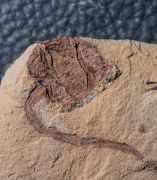
Here is a rare fossil male staminate cone of the Montana sequoia Metasequoia occidentalis.
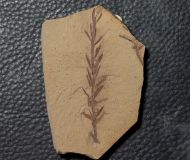
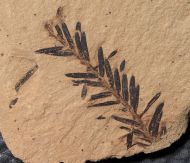
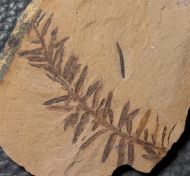
Here is a fossil leaf branch of a dawn redwood of the species Metasequoia occidentalis from Montana.
This is a detailed fossil leaf branches of a dawn redwood of the species Metasequoia occidentalis from Montana.
Here is a fossil leaf branch of a dawn redwood of the species Metasequoia occidentalis from Montana.
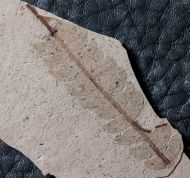
Here is a rare fossil leaf of the species Lyonothamnus parvifolius from the Miocene of Nevada. The genus Lyonothamnus is also known as Catalina ironwood.
This slab from the Muddy Creek Formation in Montana features a detailed fossil cone (fruiting body) of Metasequoia occidentalis. The fossil Metasequoia cone measures approximately 15 mm in diameter.
On this plate there are several fossil short branches of the dawn redwood tree Metasequoia occidentalis.
This is a rare trilobite of the species Platypeltoides primaevus from the Lower Ordovician of Shropshire.
Here is a rare trilobite of the species Shumardia salopiensis from the Lower Ordovician of Shropshire.
This is a rather rare Dudley trilobite of the species Acaste inflata from the Coalbrookdale Formation of Wren's Nest.
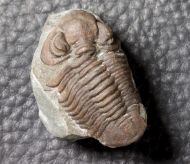
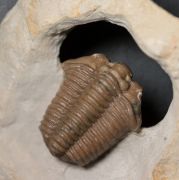
This is a relatively large and inexpensive Ohio trilobite of the species Flexicalymene meeki.
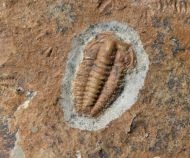
Here is a Utah trilobite from the Wheeler Formation of the classic species Elrathia kingi
Dies ist ein Ammonit der Art Ochetoceras canaliculatum aus dem Jura von Frankreich.
Here is a inexpensive Ammonite of the genus Taramelliceras from the Jurassic of France.
This is a rarely offered trilobite of the species Bigotinops dangeardi from the Lower Cambrian of Morocco. Bigotinops dangeardi comes from the Fallotaspis zone of Morocco and is thus one of the oldest trilobite species from Morocco.
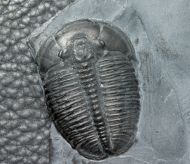
Here is a beautiful and quite large Utah trilobite from the Wheeler Shale of the species Elrathia kingi.
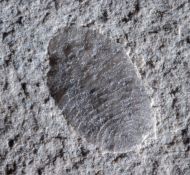
Here is an inexpensive specimen of a trilobite track of the species Cruziana furcifera from the Ordovician of Portugal.
Here is a beautiful and quite large trilobite of the species Greenops barberi from the Devonian of New York.
This is a beautiful ammonite plate with several specimens of the species Trachyceras multituberculatum from the Upper Triassic of southern China.
Here is a nice Eifel Brachiopod of the species Spinocayrtia ostiolata.
Here is a beautiful ammonite plate with several specimens of the species Trachyceras multituberculatum from the Upper Triassic of southern China.
Here is a plate with several detailed Edrioasteroidea of the species Spinadiscus lefebvrei.
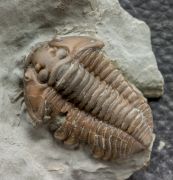
Here is a fantastic specimen of a Calymene clavicula from the Silurian of California.
Show
376
to
400
(of in total
6839
new products)
Sites:
«
...
16
17
18
19
20
...
»
mod
ified eCommerce Shopsoftware © 2009-2026