Fossils for sale
Welcome back!


Botryoidal Malachite
 Botryoidal malachite is not a purely inorganic copper carbonate aggregate but a diagenetic product whose formation was indirectly influenced by biological processes. Many of these spherical malachite bodies contain dendritic, frutexite‑like organic structures at their centers, indicating the former presence of microbial communities.
The organic matter shows typical signatures of biogenic carbon and was transformed into kerogen‑like material during diagenesis. During the breakdown of this biomass, organic acids were released. Together with halogens and metal ions, they initiated chemical oscillation reactions.
These oscillations produced the characteristic concentric banding that is typical of botryoidal malachite.
Papineau notes that such self‑organizing chemical oscillations can account for the observed rhythmic patterns and that the organic matter served as the starting point for these reactions. The mineral itself consists mainly of malachite, with part of its carbonate component derived from carbon dioxide released during the oxidation of organic matter.
Malachite can also form through microbially influenced processes, including biomineralization or the precipitation of copper carbonates by heavy‑metal‑resistant microorganisms in acidic or metal‑rich waters. These mechanisms are well documented in mining environments and in environmental remediation contexts.
Botryoidal malachite therefore reflects a rare combination of biologically initiated and chemically controlled processes, preserved in its internal structure.
Source:
Fomina, M., & Gadd, G. M. (2014). Biosorption: Current perspectives on concept, definition and application. Bioresource Technology.
Gadd, G. M. (2010). Metals, minerals and microbes: Geomicrobiology and bioremediation. Microbiology, 156(3), 609–643.
Heavy metal immobilisation with microbial-induced carbonate precipitation. (2026). HAL Science, Document 04739369.
Melchiorre, E. B., & Williams, P. J. (2001). Stable isotope geochemistry of azurite and malachite; II, A global study of copper carbonate hydrogeochemistry. American Journal of Science, 301(3), 249–276.
Papineau, D. (2020). Chemically oscillating reactions in the formation of botryoidal malachite. American Mineralogist, 105, 447–454.
Profile of Bacterial Communities in Copper Mine Tailings. (2024). Microorganisms, 12(9), 1835.
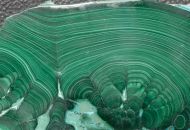
This is a polished Malachite slice
Botryoidal malachite forms through diagenetic processes shaped by organic matter and microbial activity. Its concentric banding results from chemical oscillation reactions triggered during the breakdown of biogenic material.
Botryoidal malachite forms through diagenetic processes shaped by organic matter and microbial activity. Its concentric banding results from chemical oscillation reactions triggered during the breakdown of biogenic material.
Shipping time: 3-4 Days
65,00 EUR
19 % VAT incl.

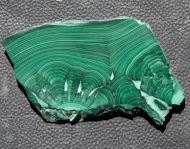
This is a polished Malachite slice
Botryoidal malachite forms through diagenetic processes shaped by organic matter and microbial activity. Its concentric banding results from chemical oscillation reactions triggered during the breakdown of biogenic material.
Botryoidal malachite forms through diagenetic processes shaped by organic matter and microbial activity. Its concentric banding results from chemical oscillation reactions triggered during the breakdown of biogenic material.
Shipping time: 3-4 Days
39,95 EUR
19 % VAT incl.
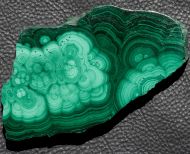
This is a polished Malachite slice
Botryoidal malachite forms through diagenetic processes shaped by organic matter and microbial activity. Its concentric banding results from chemical oscillation reactions triggered during the breakdown of biogenic material.
Botryoidal malachite forms through diagenetic processes shaped by organic matter and microbial activity. Its concentric banding results from chemical oscillation reactions triggered during the breakdown of biogenic material.
Shipping time: 3-4 Days
39,95 EUR
19 % VAT incl.